
Grief does not keep a schedule. It shows up at the grocery store, on the drive to work, in the silence of a house that used to feel normal. When tragedy touches a whole community at once, that grief multiplies in ways that are hard to describe and even harder to carry alone.
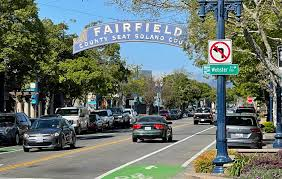
Fairfield has had its share of hard moments. Moments that stopped the city mid-stride and left residents asking the questions that tragedy always brings. Why did this happen. What do we do now. How do we keep going.
Those questions do not have easy answers. But the way a community responds to them says everything about who it is and what it values.
What Fairfield has shown, in each of these moments, is that it chooses to show up. Together. And that choice does not happen by accident. It happens because the right people decide to make it happen.
When Violence Hit Fairfield, the Community Did Not Retreat
When violence recently shook this city, residents did not disappear into silence.
They came out.
On June 6th at the Civic Center Pond, hundreds of people showed up with lawn chairs and blankets and a shared willingness to sit with grief together. The Community Healing Circle, co-hosted by Broken by Violence, Tri-City NAACP, and Councilwoman K. Patrice Williams, created exactly the kind of space that communities need after trauma.
Researchers who study collective grief consistently find that recognizing shared trauma is an essential first step in healing. When people understand that their pain is not theirs alone but is shared by many around them, they can begin to address it together and build resilience as a community. That is precisely what the Healing Circle made possible.
The evening was not a press conference or a political event. It was a genuine gathering built around seven words.
You don’t have to carry this alone.
Here is what that looked like in practice:
- Therapist Rochelle Henderson led the crowd through scream therapy, giving people a physical way to release what they had been holding inside
- Andre Humphrey with Inner City Bliss brought healing through words and sounds, meeting people exactly where they were emotionally
- Ebony led a formal acknowledgment of the victims, their families, and the students who witnessed what no young person should ever have to see
- Speakers including Assemblymember Lori Wilson, Solano County Supervisor Wanda Williams, and 30-year community advocate Gail Byrdsong offered presence and perspective
- Faith leaders including Pastor Brown grounded the gathering in something larger than the moment
Research shows that group affiliations help individuals re-establish purpose and connection after tragedy, buffering against isolation and fostering collective resilience. The Healing Circle was not just an emotional response. It was a community building its resilience in real time.
As explored in the piece on The Power of Knowing Your Neighbors: Why Community Connection Matters, the moments that build lasting community bonds are often the hardest ones. Tragedy, handled with intention and care, pulls people together in ways that ordinary life rarely does.
The Quieter Tragedies Nobody Talks About Enough
Not every tragedy announces itself with a single event.
Some unfold slowly and silently. The family that loses housing and spends months in survival mode. The woman who leaves incarceration with nowhere safe to land. The resident whose mental health crisis goes unaddressed because the right support was not there when they needed it most.
These are the quieter tragedies. They do not generate headlines. But they leave real damage in people’s lives and in the fabric of the community around them.
K. Patrice Williams has spent her career responding to these tragedies too. Not with statements. With infrastructure.
She co-founded Solano Impact Care to provide personalized care and meaningful connection for people navigating their hardest moments. Also, She founded Hazel’s Tranquility Place, named after her mother, because she understood that a formerly incarcerated woman trying to rebuild her life needs more than good intentions. She needs a safe home, a structured environment, and a community that is genuinely rooting for her.
As covered in A Proven Strategy to Reduce Homelessness, real community healing from these slower tragedies requires the same ingredients as healing from sudden ones:
- Genuine presence from leaders who stay engaged beyond the initial crisis
- Coordinated support between city government, nonprofits, and faith communities
- Resources that reach people before situations become emergencies
- A governing philosophy that treats every resident’s suffering as worthy of a serious, sustained response
What Healing Actually Requires From Local Leaders
Here is the honest truth.
Communities do not need their elected officials to swoop in and take over after tragedy. Research consistently finds that community-led recovery approaches produce better outcomes than top-down interventions. Communities need to be active participants in their own healing, not passive recipients of services delivered from the outside.
What they need from leaders is different. They need someone who:
- Shows up and stays present long after the initial shock fades
- Helps connect residents to the resources and organizations already doing healing work
- Creates space for community voices rather than talking over them
- Treats community wellbeing as a governing priority not a campaign talking point
- Holds the institutional knowledge of which organizations to call and which gaps still need filling
Empathetic leaders accelerate community healing by conferring meaning on tragedy, focusing on the future, and underscoring collective learning rather than retreating from difficult conversations.
This is exactly the kind of leadership Councilwoman Williams has demonstrated throughout her first term. Not leadership that appears for a photo and disappears. Leadership that shows up at the Healing Circle, then at the next community forum, then at the council meeting where budget decisions affecting support services actually get made.
Building the Infrastructure for Healing Before It Is Needed
The communities that recover best from tragedy are not the ones that respond fastest in the moment.
They are the ones that built the right relationships, organizations, and support systems before anything went wrong.
Faith-based organizations, community nonprofits, and local leaders who invest in disaster spiritual care and community gathering create a foundation for recovery that institutional government alone cannot replicate. Rebuilding the fabric of community after a disaster requires intentional, sustained investment in the structures that hold people together.
Fairfield has those structures. Organizations like Solano Impact Care and Hazel’s Tranquility Place. Faith leaders who showed up at the Healing Circle because they had already been showing up for years. Advocates like Gail Byrdsong with thirty years of community presence who did not need to be recruited or convinced. They were already there.
The question for November is whether Fairfield keeps the leadership that helped build and sustain those structures.
Why This Matters for November
A second term for K. Patrice Williams is not about starting over. It is about continuing.
She enters this election with four years of relationships with the organizations doing healing work in Fairfield. She knows which resources exist and where the gaps are. In addition, She has sat with residents in their grief and carried what she heard back into chambers. She has built organizations with her own hands that are still serving Solano County right now.
That kind of institutional knowledge and community trust takes years to build. It cannot be transferred to a first-time candidate or recreated from scratch after an election.
Re-electing her is a vote for the kind of sustained, human, community-centered leadership that makes healing possible when tragedy comes.
And in Fairfield, as in every city, tragedy will come again. The question is always whether the community has the leadership and the infrastructure to face it together.
District 1 already has both.
Frequently Asked Questions
1. What was the Community Healing Circle and who organized it?
A community gathering on June 6th at Civic Center Pond co-hosted by Broken by Violence, Tri-City NAACP, and Councilwoman K. Patrice Williams, creating space for collective healing after recent violence in Fairfield.
2. What does research say about how communities heal best after tragedy?
Communities recover strongest when healing is led from within, supported by empathetic leaders, faith organizations, and structured community gatherings that acknowledge shared grief openly.
3. What organizations in Solano County support community healing year round?
Solano Impact Care and Hazel’s Tranquility Place both provide ongoing support for residents navigating difficult circumstances, alongside organizations like Broken by Violence and Tri-City NAACP.
4. Why does local leadership matter so much during community tragedy?
Local leaders shape whether resources reach the right people, whether community voices get heard, and whether healing infrastructure exists before it is urgently needed.
5. How does re-electing K. Patrice Williams support Fairfield’s long-term resilience?
She brings four years of community relationships, organizational knowledge, and a proven track record of showing up for Fairfield in its hardest moments, which cannot be replicated by a first-time candidate.