
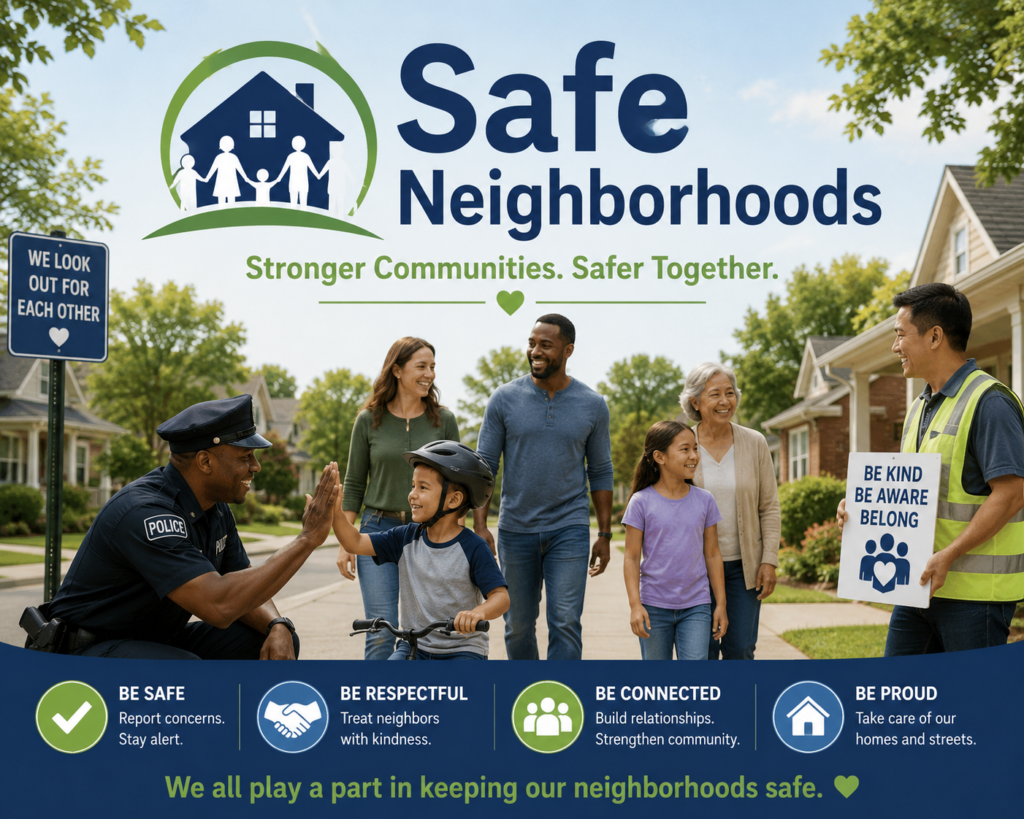
Public safety in Fairfield, CA is not just a campaign issue.
It is the foundation everything else is built on. Economic development does not work in an unsafe city. Housing investments lose value in neglected neighborhoods. Families cannot thrive when they do not feel secure walking to the corner store or letting their kids play outside.
That is why K. Patrice Williams puts public safety in Fairfield, CA at the center of her platform. Not as a talking point. As a governing priority that shapes every other decision she makes as a council member.
Fairfield’s decreased by over 11% in 2024, and that is progress worth acknowledging. But progress is not the same as solved. Property crime remains a concern. Residents in parts of District 1 still do not feel as safe as they should. And a city that stops pushing forward on public safety is a city that starts sliding backward.
Patrice is not interested in sliding backward.
Here is her full plan for building safer neighborhoods, stronger community partnerships, and a Fairfield that every resident feels proud to call home.
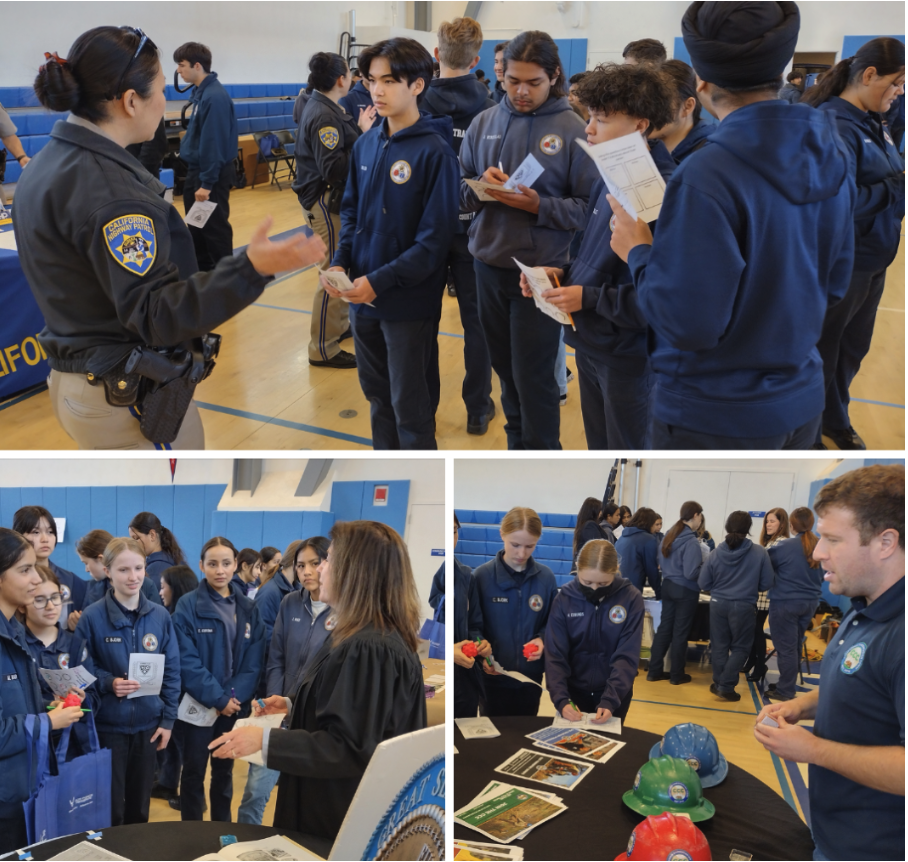
Image: Fairfield-Suisun Unified School District
Neighborhood Conditions: The Link Between Infrastructure and Public Safety in Fairfield, CA
Ask any criminologist and they will tell you the same thing. Safety does not start with policing alone. It starts with the environment.
Poorly lit streets. Overgrown vacant lots. Broken sidewalks. Deteriorating public spaces. These are not just aesthetic problems. They are public safety in Fairfield, CA problems. They signal to residents and to would-be offenders alike that nobody is watching, nobody cares, and that this block has been forgotten by the people in charge.
K. Patrice Williams understands this deeply. Her approach to public safety in Fairfield, CA starts at the neighborhood level, with the physical conditions that either make a community feel safe or strip that feeling away.
Her priorities on neighborhood infrastructure include:
- Improved street lighting across District 1, with particular attention to the corridors and intersections in Cordelia and Green Valley that residents have identified as feeling unsafe after dark
- Consistent landscaping and maintenance of public spaces, because well-kept parks and medians communicate investment and care, which actively deters crime
- Rapid response to blight including abandoned properties, graffiti, and broken public infrastructure, because deferred maintenance compounds quickly and sends exactly the wrong message to a neighborhood
- Pedestrian safety improvements that make it safer and more comfortable for residents to walk, bike, and move through their community without feeling exposed or vulnerable
None of this is glamorous. But it is the kind of steady, unglamorous investment in public safety in Fairfield, CA that makes a measurable difference in how safe a neighborhood actually feels and actually is.
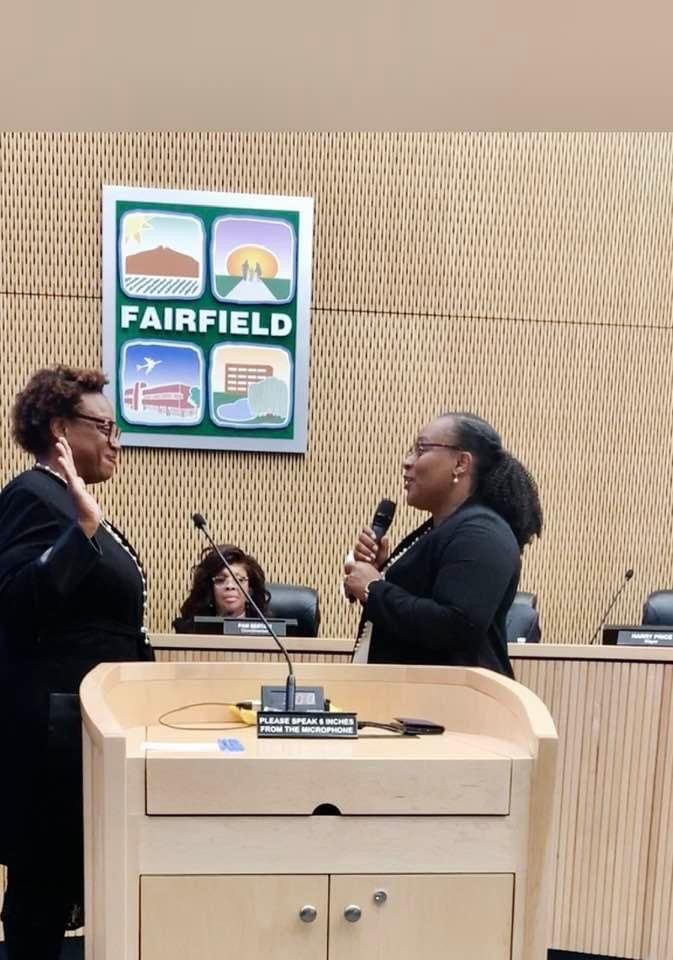
Community Policing: Strengthening the Bond Between Residents and Law Enforcement
Trust is the foundation of effective public safety in Fairfield, CA.
Without it, residents do not report crimes. They do not cooperate with investigations. They do not call when they see something that concerns them. And law enforcement ends up operating in the dark, reactive rather than preventive, always a step behind the problems they are trying to solve.
The U.S. Department of Justice’s Office of Community Oriented Policing Services has found that increased community policing capacity helps law enforcement agencies identify problem factors driving crime, understand the nature of problems, and more effectively resolve specific crimes. That is not just theory. That is the evidence base behind why community policing works when it is done right.
K. Patrice Williams is a strong advocate for community policing as a central pillar of public safety in Fairfield, CA. What that looks like in practice:
- Regular neighborhood walkthroughs where officers build genuine relationships with residents outside of emergency contexts, so that when something happens, both sides already have a foundation of trust to work from
- Community liaison programs that create consistent, accessible points of contact between Fairfield PD and the neighborhoods they serve in District 1
- Transparent communication about crime trends in specific neighborhoods so residents have the information they need to stay aware and engaged rather than being kept in the dark
- Culturally competent policing that reflects the diversity of Fairfield’s community and builds confidence among residents who may have historically had complicated relationships with law enforcement
- Accountability measures that hold the department to the same standards of transparency and performance that Patrice applies to every other area of city government
The goal is a relationship between residents and law enforcement built on mutual respect, clear communication, and shared investment in the safety of every neighborhood in District 1. You can read more about how that approach connects to Fairfield’s broader accountability framework in our article on Fiscal Discipline and Accountability in Fairfield.
Youth Engagement: Preventing Crime Through Education and Opportunity
The most effective public safety strategy is the one that keeps a young person from making a choice they cannot take back.
Incarceration is expensive, damaging, and often counterproductive. According to research from the Justice Policy Institute, the average state cost for secure confinement of a youth is $588 per day, while community-based prevention programs can cost as little as $75 per day. The math is not complicated. Investing in young people early is not just the compassionate choice. It is the fiscally responsible one.
K. Patrice Williams is committed to making youth engagement a core component of public safety in Fairfield, CA. Her approach:
- After-school and evening programming that gives young people structured, positive environments during the hours when they are most likely to get into trouble
- Mentorship pipelines that connect Fairfield youth with professionals, business owners, and community leaders who can expand their sense of what is possible for their future
- Career and vocational training opportunities for older teens and young adults that create real economic pathways and reduce the pull of street involvement
- Investment in school-based prevention programs that identify at-risk youth early and connect them with support before small problems become serious ones
- Partnerships with youth-serving organizations already doing strong work in Cordelia, Green Valley, and across District 1 so the city is amplifying existing community assets rather than duplicating them
The Office of Juvenile Justice and Delinquency Prevention has emphasized that the goal must be to prevent most young people from entering the juvenile justice system in the first place and to help justice-involved youth find positive paths for the future. Patrice’s youth engagement strategy is built directly on that principle.
A young person with opportunity, mentorship, and a genuine stake in their community’s future is one less public safety concern and one more asset to the city of Fairfield. That investment pays dividends for decades.
Emergency Preparedness: Ensuring Fairfield Is Ready for Any Crisis
Public safety in Fairfield, CA does not only mean preventing everyday crime.
It means making sure this city is ready when the unexpected happens. Natural disasters. Public health emergencies. Large-scale incidents that require a coordinated, rapid response across multiple agencies and departments. A city that is not prepared for those moments puts its residents at serious risk.
Fairfield sits in a region where wildfire risk, seismic activity, and extreme weather events are real and ongoing concerns. Emergency preparedness is not a theoretical exercise here. It is a practical necessity.
K. Patrice Williams’ approach to emergency preparedness as part of her broader public safety in Fairfield, CA agenda includes:
- Regular review and updating of the city’s emergency response plans to ensure they reflect current risks, current resources, and current community demographics
- Strengthening coordination between Fairfield’s emergency services and Solano County so that when a crisis hits, the response is seamless rather than siloed
- Community education on emergency preparedness so that Fairfield residents, particularly in District 1, know what to do, where to go, and how to help their neighbors when something goes wrong
- Equity in emergency response making sure that the neighborhoods and populations most vulnerable in a crisis, seniors, low-income families, residents with disabilities, are not left behind in emergency planning
- Investment in communication infrastructure so that the city can reach every resident quickly and clearly during a developing emergency
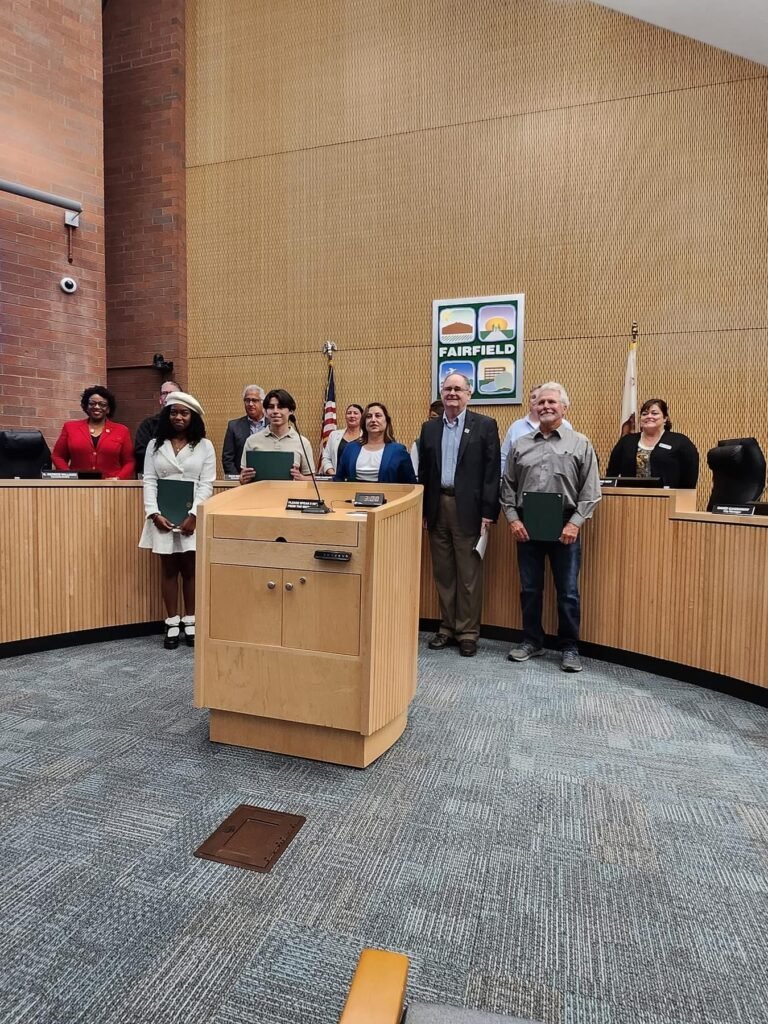
How Residents and City Leadership Work Together
Here is the truth about public safety in Fairfield, CA that too few politicians are willing to say plainly.
Government cannot do this alone.
Police departments cannot do this alone. City councils cannot do this alone. The residents of Fairfield are not passive recipients of public safety. They are active participants in it. And the cities that understand that, that build genuine partnerships between city leadership, law enforcement, nonprofit organizations, faith communities, businesses, and everyday residents, are the ones that see lasting improvements in safety outcomes.
K. Patrice Williams has built her entire approach to governance around this philosophy. You can see it in her homelessness strategy, where she emphasizes coordinated care between the city and organizations like Solano Impact Care and Empower Solano. You can read more about that approach in our piece on Compassionate and Accountable Solutions to Homelessness in Fairfield. The same principle applies directly to public safety in Fairfield, CA.
Her collaborative safety model includes:
- Neighborhood watch and community safety networks that give residents organized, supported ways to look out for each other and communicate concerns to city leadership
- Regular community safety forums in District 1 where residents can speak directly with council leadership and law enforcement about what they are seeing and what they need
- Business community partnerships that bring local employers and commercial districts into the public safety conversation, because safe neighborhoods are good for business and businesses have a stake in keeping them that way
- Faith community engagement because Fairfield’s churches, mosques, temples, and other faith organizations have deep roots and deep trust in communities that city government sometimes struggles to reach
- Data sharing and transparency so that residents can see the public safety picture clearly, understand where progress is being made, and hold their elected officials accountable for results
Fairfield Deserves to Feel Safe. K. Patrice Williams Is Fighting to Make It Happen.
Public safety in Fairfield, CA is not a single issue with a single solution.
It is neighborhood lighting and community policing. Also, it is youth programs and emergency preparedness. It is the trust between a resident and the officer who patrols their block. It is the after-school program that keeps a teenager off a corner on a Friday night. Likewise, it is the emergency plan that protects the most vulnerable residents when a crisis hits without warning.
Infact, it is everything, working together, led by someone who understands that public safety in Fairfield, CA is not a campaign slogan. It is a daily commitment to the people who live here, raise their families here, and deserve to feel secure in the city they call home.
K. Patrice Williams has spent four years building the relationships, the knowledge, and the credibility to lead this work. She is not done.
This November, vote K. Patrice Williams for Fairfield City Council, District 1.