
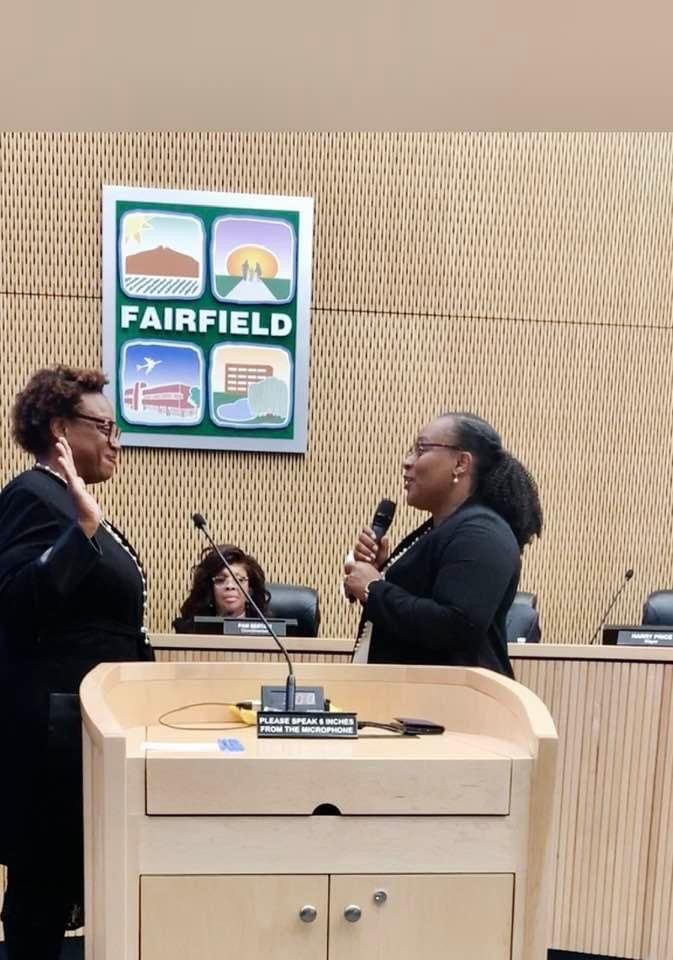
Fairfield City Council transparency is not just a political talking point in this environment. It is the difference between a government residents trust and one they tolerate. It is the foundation on which everything else, housing policy, public safety, economic development, budget decisions, is either built solidly or built on sand.
K. Patrice Williams has made Fairfield City Council transparency a defining feature of her time in District 1. Not because it is the popular thing to do. Because she believes, deeply and practically, that residents cannot hold their government accountable for decisions they cannot see. And she has the legal background, the communication instincts, and the personal track record to make that belief mean something in practice.
Here is what Fairfield City Council transparency looks like when it is done right.

The Legal Lens: How Her J.D. Background Ensures Ethical Policymaking
Most council members learn governance on the job.
K. Patrice Williams arrived already knowing the rules, and more importantly, knowing why the rules exist.
Her Juris Doctor from San Francisco Law School is not just a credential on a campaign website. It is a lens through which she reads every policy, every proposal, and every decision that crosses her desk as a council member. She understands the legal framework governing Fairfield City Council transparency at a level that most elected officials at the local level simply do not.
California’s Ralph M. Brown Act, codified in Government Code sections 54950 through 54963, was enacted to require open meetings of local agencies and to curb misuse of the democratic process by secret legislation of public bodies. That law is the legal floor for Fairfield City Council transparency. Patrice treats it as exactly that: a floor, not a ceiling.
Her legal training shapes her approach to policymaking in specific, practical ways:
- She reads proposed ordinances and resolutions with attention to how they will actually function in the real world, not just how they sound in a council meeting
- She asks the procedural questions that other council members sometimes skip, because she knows that the details of how decisions are made matter just as much as what is decided
- She understands conflict of interest law, public records requirements, and open meeting obligations not as bureaucratic hurdles but as protections for the residents she represents
- She applies the same analytical rigor to city contracts and budget line items that a practicing attorney would bring to any legal document, looking for gaps, ambiguities, and potential consequences that are not immediately obvious
Fairfield City Council transparency is not possible without council members who actually understand what transparency requires legally, ethically, and practically. Patrice brings that understanding to every single vote.
Open Communication: Her Commitment to Listening and Responding to Residents
Transparency is not just about what happens inside council chambers.
It is about what happens between meetings. Between elections. Between the moments when residents feel like they have a formal opportunity to speak and the long stretches of time when government just keeps moving whether anyone is paying attention or not.
K. Patrice Williams has built her approach to Fairfield City Council transparency around a simple but radical idea. Residents should not have to file a records request to know what their government is doing. They should not have to show up to a meeting at 7pm on a Tuesday to have any voice in decisions that affect their neighborhood. And they should never feel like their feedback disappears into a void the moment the public comment period closes.
The OECD’s 2024 Survey on Drivers of Trust in Public Institutions found that 69% of people who feel they have a say in government actions trust their government, compared to only 22% of those who feel they do not. That gap is enormous. And it is entirely preventable with the right kind of leadership.
Patrice’s open communication approach includes:
- Regular community updates that go beyond the formal meeting cycle, keeping District 1 residents informed about what is being discussed, what decisions are coming, and what the council is hearing from city staff and outside agencies
- Accessible language in public communications because Fairfield City Council transparency means nothing if the information being shared requires a law degree to understand. Plain language is not dumbing things down. It is respecting the people you serve.
- Genuine responsiveness to constituent questions and concerns, treating outreach from residents as a core part of the job rather than an interruption to it
- Leveraging her platform on Turning Point with K. Patrice Williams to have honest, unfiltered conversations about city issues in a format that residents can actually access and engage with on their own schedule
- Multilingual and multicultural outreach that reflects the diversity of Fairfield’s community and ensures that language is never a barrier to participation in local democracy
This is what Fairfield City Council transparency looks like in practice. Not just open meetings. Open lines of communication, year round, on the terms that work for residents, not just for government.

Accountable Decisions: Standing Firm on Principles That Benefit the Community
Transparency without accountability is just performance.
Anyone can say they believe in open government. Fewer elected officials are willing to make decisions that are hard, unpopular, or politically costly because they are the right decisions for the community. That is where principle meets practice. And that is where K. Patrice Williams has consistently separated herself from politicians who treat Fairfield City Council transparency as a campaign slogan rather than a governing standard.
Accountability, as she practices it, means several things simultaneously:
- Voting based on evidence and community need not based on political pressure or the preferences of whoever has the loudest voice in the room on a given day
- Explaining votes publicly and clearly because residents deserve to understand the reasoning behind decisions that affect them, not just the outcomes
- Acknowledging when things do not go as planned and being honest about why, rather than quietly moving on and hoping nobody noticed
- Holding city departments and contractors to the same standards she applies to herself, ensuring that public resources are spent wisely, outcomes are measured honestly, and underperformance is addressed rather than ignored
- Refusing to conflate what is politically convenient with what is right for the long-term health of Fairfield’s communities
This connects directly to the fiscal accountability framework she has championed throughout her first term. As detailed in the piece on Fiscal Discipline and Economic Prosperity in Fairfield, accountability is not a value that operates in isolation. It runs through every area of city governance, from how the budget is built to how contracts are awarded to how outcomes are reported back to the public.
Fairfield City Council transparency means the community can see the decisions being made. Accountability means they can trust that those decisions are being made for the right reasons. Both are non-negotiable for Patrice.
Public Trust: Rebuilding Confidence in Local Government
Here is the uncomfortable truth that not enough local politicians are willing to say.
Trust in government is broken. Not just at the federal level. Not just in state capitals. At the local level too, in city halls and council chambers across California, residents have accumulated years of experience that taught them the same lesson: the decisions that affect my life are made in rooms I am not in, and nobody is really listening to what I think.
That experience does not just breed cynicism. It breeds disengagement. People stop showing up. Stop calling. Stop believing that their participation matters. And when that happens, local government becomes less accountable, not more, because the feedback loops that keep elected officials honest stop functioning.
Research published in Public Organization Review found that transparency, accountability, and responsiveness together predicted more than 60% of the variance in public trust in local government, meaning these are not soft, feel-good values. They are the actual mechanisms through which local government either earns or loses the confidence of the people it serves.
K. Patrice Williams takes that seriously.
Her vision for rebuilding public trust through Fairfield City Council transparency includes:
- Consistent follow-through on commitments made in public, because nothing destroys trust faster than a council member who says one thing in a community forum and does another in chambers
- Proactive disclosure of information that residents have a right to know, rather than waiting to be asked and releasing the minimum required
- Community forums that actually change outcomes not just check a box. Residents should be able to point to specific decisions that were shaped by community input, or Fairfield City Council transparency remains theoretical
- Clear, measurable reporting on city performance across key areas, from public safety to housing to economic development, so residents can assess for themselves whether things are moving in the right direction
- Treating public criticism as valuable information rather than an attack to be managed, because a council member who only wants to hear positive feedback is not actually listening
Patrice has been deliberately building this kind of trust in District 1 since 2022. Not through grand gestures but through consistent, unglamorous follow-through. That is the foundation that public trust is actually built on.
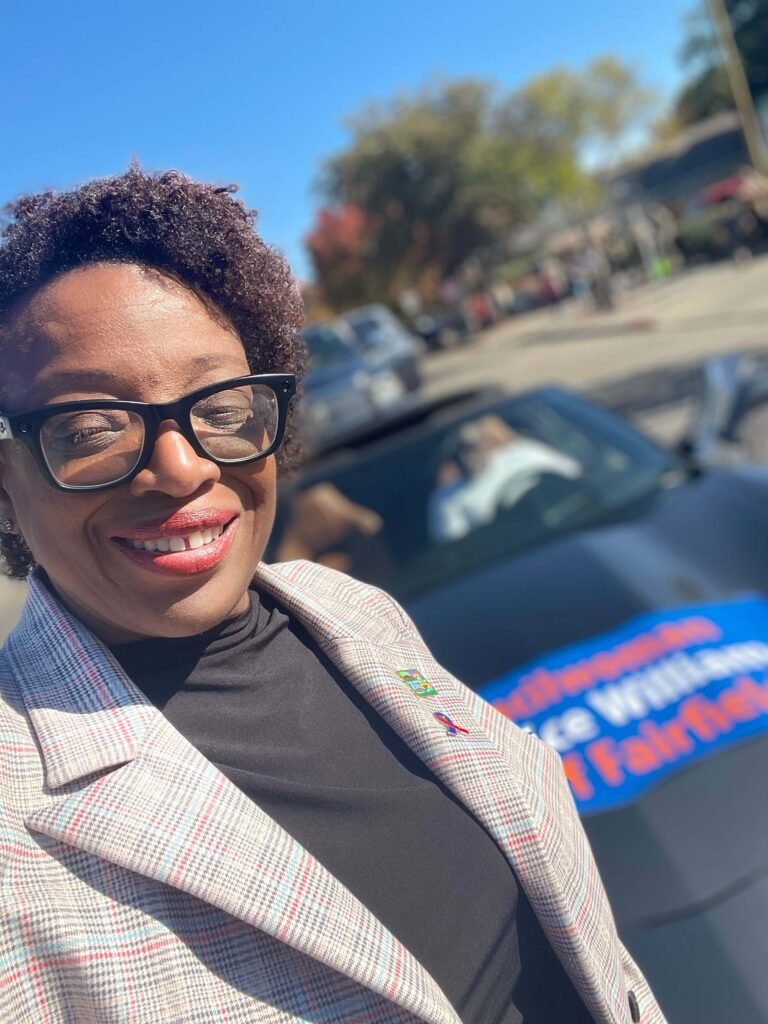
Integrity in Action: Examples of Her Transparent Leadership on the Council
It is easy to talk about Fairfield City Council transparency. Harder to demonstrate it consistently over four years in office.
K. Patrice Williams has a record that shows what this commitment actually looks like when it is put to work.
She has communicated proactively about city decisions affecting District 1
Rather than waiting for residents to find out through local news or word of mouth, she has made it a practice to get ahead of significant decisions, explaining what is being considered, what the tradeoffs are, and what residents can do to weigh in before votes are taken.
She has maintained accessibility between election cycles
Her engagement with constituents in Cordelia and Green Valley has not been limited to campaign season. She has shown up consistently, making herself available to hear from residents even when there was no political incentive to do so.
She has pushed for clearer budget communications
Understanding where the city’s money goes should not require a finance background. Patrice has consistently advocated for financial reporting that is accessible to ordinary residents, not just to accountants and policy professionals. This work is discussed in more detail in the article on Fairfield’s Housing Affordability Crisis and the Policy Response, where transparent resource allocation is central to the strategy.
She has championed coordinated, transparent responses to community challenges
Whether the issue is homelessness, housing affordability, or public safety, her approach has consistently been to bring partners, data, and community voices into the same room rather than making decisions behind closed doors and presenting residents with a fait accompli.
She has modeled the kind of communication she expects from city government
Through Turning Point with K. Patrice Williams, she has demonstrated week after week what honest, accessible public dialogue looks like. That is not just a media project. It is a statement about how she believes elected officials should communicate with the people they represent.
Fairfield Deserves a Council That Earns Its Trust Every Single Day
Fairfield City Council transparency is not a feature of good local government. It is the foundation of it.
Without it, every other priority, housing, public safety, economic development, small business support, rests on an unstable base. Residents who do not trust their government do not engage with it, do not support its initiatives, and do not give it the benefit of the doubt when difficult decisions have to be made.
K. Patrice Williams has spent four years building that trust in District 1. Her legal training sharpens her judgment. Also, her open communication keeps residents informed. Her accountability in decision-making builds trust. Her consistent presence in the community keeps her grounded. Together, these qualities show what transparency on Fairfield City Council looks like when leaders treat it as a governing principle — not a talking point.
Fairfield does not need another politician who promises to be transparent. It needs a council member who already is.
This November, vote K. Patrice Williams for Fairfield City Council, District 1.
Learn more at kpatriceforfairfield.com
Frequently Asked Questions
1. What does transparency actually mean at the city council level?
It means residents can see how decisions are made, understand why they are made, and have a real opportunity to weigh in before those decisions are finalized.
2. How does K. Patrice Williams go beyond the minimum transparency requirements?
She treats California’s Brown Act as a floor, not a ceiling, proactively sharing information with District 1 residents rather than waiting for them to ask.
3. Does her legal background really make a difference in how she governs?
Absolutely, her J.D. enables her to read every policy and proposal with a trained eye for gaps, consequences, and the legal protections residents are entitled to.
4. How can Fairfield residents stay informed about what is happening at City Hall?
Following K. Patrice Williams on her platforms and tuning into Turning Point with K. Patrice Williams is one of the most direct ways to stay connected to the issues shaping District 1.
5. What separates her accountability standard from other elected officials?
She explains her votes publicly, acknowledges when outcomes fall short, and holds herself to the same standard she applies to every city department and contractor.