
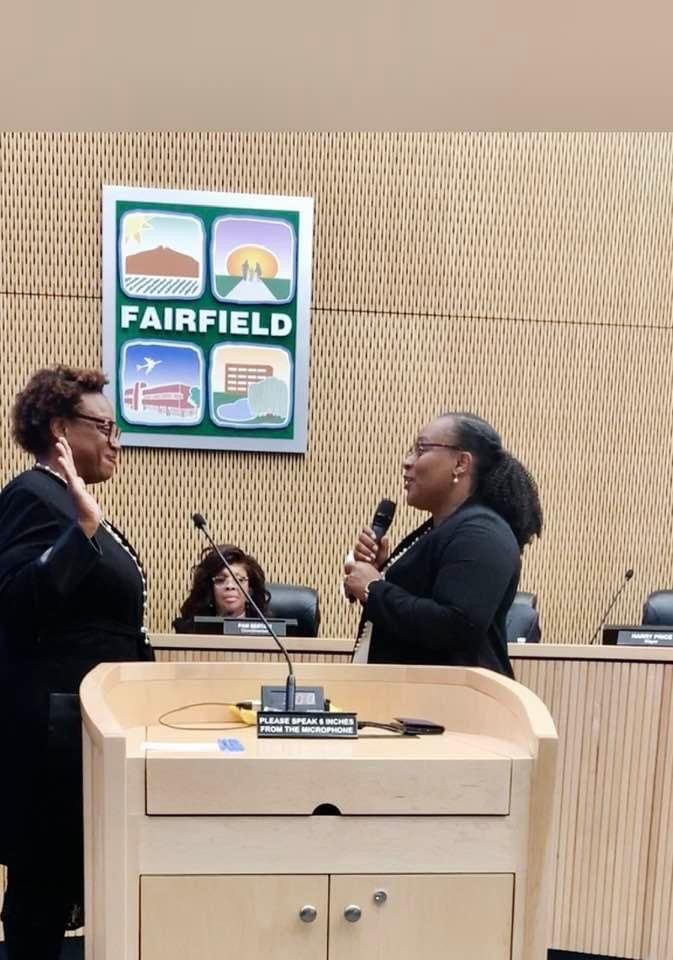
Most people assume elections are decided by the majority.
They are not. Local elections are decided by whoever actually shows up. And in city council races across California, that number is often shockingly small. We are talking about elections where the winning candidate receives a few hundred votes in a district of thousands of registered voters. Elections where a single apartment complex, a single church congregation, or a single motivated group of neighbors could swing the entire outcome.
That is not a hypothetical. That is how local democracy actually works when most people decide their vote does not matter enough to cast it.
This November, District 1 in Fairfield, California is holding one of those elections. And what happens in that race, who wins, who loses, and who stays home, will shape this community for the next four years in ways that are far more immediate than anything happening in Washington.
Here is what low turnout actually costs District 1. And here is why showing up for K. Patrice Williams this November is one of the most direct things a Fairfield resident can do for their own neighborhood.
The Math of Low Turnout Elections
California local elections held in odd years or off-cycle from presidential races consistently see turnout below 20 percent of registered voters. In some city council races, the number drops even lower.
Think about what that means in practice.
If District 1 has 10,000 registered voters and 18 percent turn out, roughly 1,800 people are making the decision for everyone else. A candidate who wins with 51 percent of that turnout wins on approximately 918 votes. Less than 1,000 people out of 10,000 registered voters just decided who represents the entire district for four years.
Now think about who those 1,800 people are. Research consistently shows that low-turnout elections skew toward older, higher-income, homeowning voters. The groups most likely to sit out local elections are renters, young people, working families juggling multiple jobs, and residents who have never been told clearly enough that their vote in this race actually changes things in their neighborhood.
The result is a structural imbalance. City council decisions shape the daily lives of working families navigating rising rents, small business owners fighting through permitting, and residents who depend on city services. Yet these same people show up least in the elections that determine those decisions.
That imbalance does not fix itself. It requires intentional effort from candidates, campaigns, and communities to close it.
What Changes When the Wrong Person Wins
Let’s be specific about what is actually at stake in District 1 this November.
The council member sitting in that seat will vote on Fairfield’s budget priorities for the next four years. They will vote on zoning and development decisions that determine what gets built in Cordelia and Green Valley and who benefits from that growth. They will vote on public safety funding, homelessness response strategy, small business support programs, and infrastructure investment across the district.
These are not abstract policy debates. They are decisions that show up in the condition of the road in front of your house. Whether in the park your kids play in gets maintained or neglected. In whether the small business on your block gets the support it needs to stay open. In whether the city pursues the kind of homelessness prevention funding that keeps families housed before they end up on the street.
As explored in the piece on Fiscal Discipline and Economic Prosperity in Fairfield CA, the city faces real structural budget challenges that require informed, experienced leadership to navigate. A council member who does not understand those challenges, who has not spent four years learning the relationships, the systems, and the funding mechanisms that move resources into District 1, is going to make decisions that cost the community significantly more than the cost of showing up to vote.
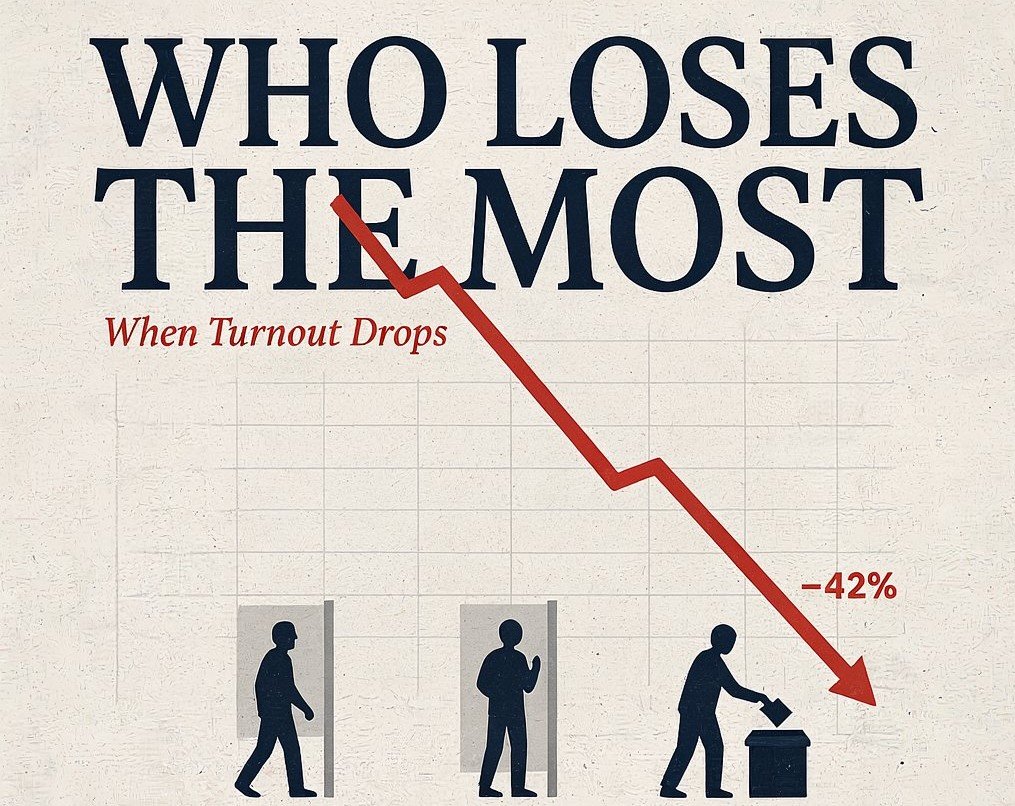
Who Loses the Most When Turnout Drops
Not everyone feels the consequences of low turnout equally.
Renters in Cordelia and Green Valley are disproportionately affected by zoning and development decisions, rent pressure, and the availability of affordable housing options. They are also among the least likely to vote in local elections, partly because they move more frequently and registration does not always follow them, and partly because nobody has made the case clearly enough that this particular election is the one that determines whether their neighborhood gets better or stays stuck.
Young people carry an enormous stake in what Fairfield becomes over the next decade. The economic development decisions being made right now will shape the job market they enter. The housing decisions being made right now will determine whether they can afford to stay in the city they grew up in. And yet young voters are consistently underrepresented in local elections because the systems and culture around civic engagement have never made local politics feel urgent enough to compete with everything else demanding their attention.
Working families with limited time are making real trade-offs every day. Adding a trip to a polling place to an already stretched schedule feels like a luxury. But the trade-off of not voting, of letting someone else decide who represents you for four years, is far more expensive in the long run.
These are the communities K. Patrice Williams has spent four years fighting for. And they are the communities that most need to show up for her this November.
What Four More Years of the Right Leadership Actually Protects
Progress in local government is not permanent by default.
It requires consistent advocacy, sustained relationships, and a council member who shows up prepared for every vote. The work K. Patrice Williams has done in her first term on homelessness, housing, small business support, public safety, infrastructure, and transparency does not automatically continue if someone else takes that seat. It has to be built on, defended, and carried forward by someone who understands what was built and why it matters.
She co-founded Solano Impact Care to meet community members in their hardest moments. Also, She founded Hazel’s Tranquility Place to give formerly incarcerated women and their children a real pathway forward. She has spent four years in council chambers pushing for the data, the funding, and the partnerships that move Fairfield toward the kind of city where every resident has a real shot at stability.
That is not a record that gets replaced easily. And it is not a standard that gets maintained without the community’s active support.
A second term for K. Patrice Williams means the infrastructure investment in Cordelia and Green Valley keeps moving. It means the homelessness prevention conversation that started in the council chamber gets funded and implemented. In addition, it means a small business community that has a champion at the table who understands what it actually costs to keep a business running. It means a District 1 that continues moving in the right direction rather than starting over.
But none of that happens if the people who benefit most from her leadership decide their vote can wait until a bigger election.
Your Vote Is More Powerful Than You Think
Here is the honest version of the math.
In a local election with low turnout, your single vote carries more weight than it does in almost any other election you will ever cast. Presidential races are decided by millions of votes. District 1 in November could be decided by hundreds. That is not a reason to feel like your vote does not matter. It is a reason to understand that it matters enormously.
The residents who show up consistently in local elections are the ones whose priorities get heard. The neighborhoods with high local election turnout get attention from city hall because their representatives know they are watching. The neighborhoods that stay home get taken for granted.
District 1 does not have to be a neighborhood that gets taken for granted. Not this November.
Register if you have not already. Confirm your registration if you have moved. Request your mail ballot early and send it back the day you fill it out. If you vote in person, bring someone with you. Tell your neighbor, your coworker and tell the person in your building who always says their vote does not make a difference.
It does. Especially here. Especially now.
Fairfield has a council member in District 1 who has spent four years proving she belongs in that seat. A woman with the legal training, the business experience, the community roots, and the personal investment in this city’s future to keep fighting for everyone who calls this district home.
All she needs is for District 1 to show up.
Vote K. Patrice Williams for Fairfield City Council, District 1, this November.