
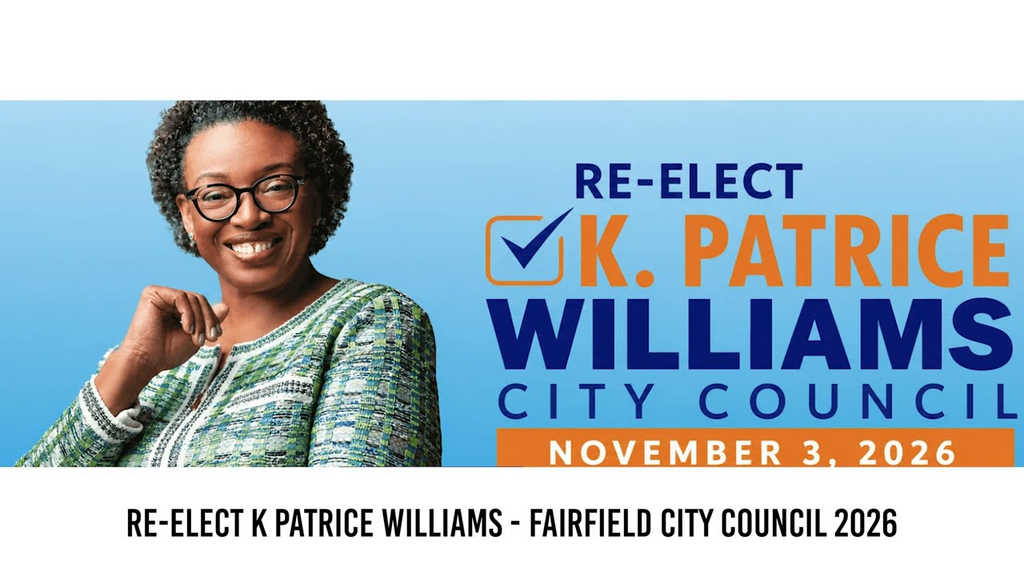
Fairfield has felt some real economic pain recently.Two major employers left the area. Good-paying jobs disappeared. Families who built their financial stability around those jobs had to figure out what comes next. And the question hanging over District 1 right now is straightforward. Who has a real plan to replace what was lost and build something more durable in its place?
K. Patrice Williams does. And unlike a lot of campaign promises, hers comes with a track record to back it up.
As she seeks re-election to Fairfield City Council District 1, representing Cordelia and Green Valley, her economic platform rests on three specific pillars. Attracting high-wage industries. Building real workforce pipelines. And giving local small businesses the tools they need to grow. Here is what each of those actually means in practice.
Bringing Better-Paying Jobs to Fairfield
Replacing lost jobs with more lost jobs is not a strategy. Replacing them with better ones is. That is the starting point of K. Patrice Williams’ economic development approach. She wants to recruit high-wage industries to Fairfield specifically because she understands that the families in Cordelia and Green Valley do not just need employment. They need employment that pays enough to actually live in this region comfortably.
Fairfield sits in a genuinely strong position for this kind of recruitment. The city offers direct access to both Interstate 80 and Interstate 680. It sits between San Francisco and Sacramento, giving businesses access to two major economic centers without the cost of operating inside either. Travis Air Force Base provides a consistent economic anchor and a skilled workforce pipeline. And commercial real estate costs remain significantly lower here than in the Bay Area cities competing for the same employers.
The opportunity is real. Capturing it requires active, strategic recruitment by city leadership that knows how to make the case for Fairfield to industries considering multiple locations. Williams brings her legal and economics background directly to that conversation, understanding both how to evaluate the long-term value of an economic development deal and how to negotiate terms that genuinely benefit existing Fairfield residents rather than just the incoming business.
She is specifically targeting industries that pay well and have room to grow in this region. Healthcare. Technology. Logistics. Professional services. These are sectors where Fairfield already has some infrastructure and where residents with the right preparation can compete effectively for quality positions.
Building Real Pathways From Training to Employment
A job announcement means nothing to a Fairfield resident who does not have the skills to apply for it. That is why workforce development is not a separate conversation from economic development in Williams’ platform. They are the same conversation. Bringing high-wage employers to Fairfield only benefits the community if Fairfield residents can actually access those jobs. Building that access requires intentional investment in workforce pipelines that connect people to opportunities from the moment a position is created.
Her workforce development strategy focuses on several specific approaches. Partnering with Solano Community College and other regional education providers to align training programs with the actual hiring needs of incoming businesses. Supporting apprenticeship programs that give residents hands-on experience before they walk into an interview. Investing in digital skills training because the modern workforce, across nearly every industry, requires a baseline level of technology fluency that not every resident currently has.
Beyond traditional training, she recognizes that AI and emerging technologies are already reshaping what employers need. Rather than ignoring that shift or treating it as a threat, she supports workforce readiness programs that help Fairfield residents understand and work alongside these technologies rather than being displaced by them.
Through her firm BrandGOV, she has already directed programs that trained hundreds of small businesses in crisis management, digital equity, and capacity building. That real-world experience informs how she thinks about workforce development at the city level. She is not theorizing about what works. She has already been doing it.
Supporting the Small Businesses Already Here
Large employers make headlines. Small businesses keep Fairfield running day to day. The restaurants where families celebrate. The contractors who maintain the homes in Cordelia. The service businesses started by residents who bet everything on themselves and their community. These businesses employ people too. They keep spending dollars circulating locally. And they deserve a council member who fights for them as hard as she fights to attract new employers from outside.
Williams’ small business support platform is grounded in the practical realities of what local entrepreneurs actually need. Streamlined permitting so that the process of getting a business open does not cost six months of runway before the first customer walks in. Better access to resources including the Solano-Napa Small Business Development Center, which offers free advising, workshops, and connections to funding for businesses in Fairfield (94533) and across the county. Active promotion of the city’s local procurement process so that Fairfield businesses have a genuine shot at city contracts rather than watching that spending go to outside vendors.
She pays particular attention to small and minority-owned businesses because she knows these entrepreneurs face structural barriers that standard programs do not always address. Through BrandGOV, she has worked directly to help businesses understand the public contracting process so they can compete, win, and grow. As mayor, she will bring that same specific, practical knowledge to city-level policy decisions that affect how accessible public contracts are for local business owners.
What She Has Already Built for Workers Who Need a Second Chance
Here is where her economic agenda gets deeply personal. Hazel’s Tranquility Place, the transitional home she founded and named after her mother, does more than provide housing for formerly incarcerated women and their children in Solano County. It provides job-readiness resources. Support for building new careers. A genuine pathway from instability to economic independence.
This matters for the jobs conversation because formerly incarcerated individuals represent one of the most consistently overlooked segments of the available workforce. They want to work. They are willing to work. And they often bring skills, discipline, and motivation that employers genuinely value. The barrier is not capacity. It is the structural obstacles that make it nearly impossible to secure employment without support.
Through Hazel’s Tranquility Place, Williams has been directly addressing those obstacles in Solano County. That work gives her a perspective on workforce development and second-chance employment that most elected officials simply do not have. And it reinforces why her approach to economic development is always centered on the people, not just the numbers.
Visit hazelstranquility.org to learn more and support the work directly.
Why Re-Electing Her Is the Economic Vote
District 1 does not need someone learning how economic development works at the city level for the first time.
It needs someone who already knows how to navigate the funding mechanisms, build the partnerships, and push through the bureaucratic friction that sits between a good economic development idea and an actual job created for an actual Fairfield resident.
Williams has spent four years building that knowledge. She has the legal background to evaluate complex deals. The economics training to understand long-term fiscal impact. The small business experience to know what entrepreneurs actually need. And the nonprofit track record to understand what workforce development looks like for the residents who need it most.
November 3rd is the moment District 1 locks in four more years of that expertise at the council table. Or it is not.
Vote K. Patrice Williams for Fairfield City Council District 1, November 3, 2026.
Frequently Asked Questions
1. What are K. Patrice Williams’ three main economic priorities for Fairfield?
Attracting high-wage industries to replace lost employers, building workforce development pipelines that connect Fairfield residents to new jobs, and supporting local small businesses with the resources and tools they need to grow and hire locally.
2. What industries is she targeting for Fairfield economic development?
Healthcare, technology, logistics, and professional services. These sectors pay well, have room to grow in this region, and align with the workforce strengths Fairfield already has through Travis Air Force Base and Solano Community College.
3. What is BrandGOV and what has it done for Fairfield businesses?
BrandGOV is K. Patrice Williams’ firm that has directed programs training hundreds of small businesses in crisis management, digital equity, and capacity building. Visit brandgov.com to learn more.
4. How does Hazel’s Tranquility Place connect to her jobs plan?
Hazel’s Tranquility Place provides transitional housing and job-readiness resources for formerly incarcerated women and their children in Solano County, creating direct pathways to employment for a population that standard workforce programs consistently overlook.
5. When is the election and how do I vote?
Election Day is November 3, 2026. Ballots have already dropped. Return yours by mail or at an official drop box. Visit solanocounty.gov for drop box locations near Cordelia and Green Valley.