
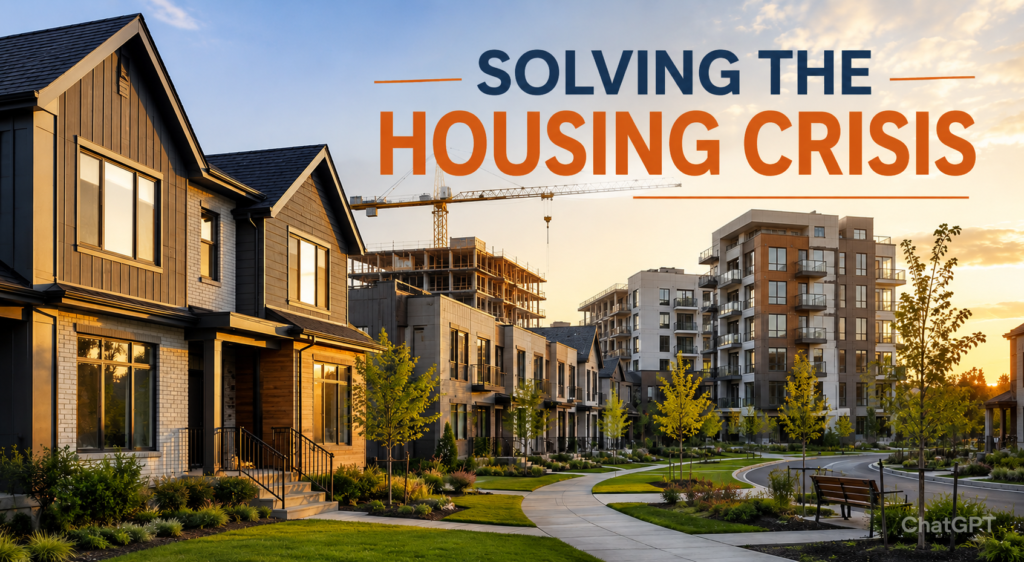
Housing is personal. It is not a policy talking point or a line item in a budget report. Instead, it is the roof over your children’s heads. It is the neighborhood where you build your life. Also, it is the difference between stability and survival mode. And right now, for too many families in Fairfield, California, that difference is getting harder and harder to manage.
K. Patrice Williams knows this. Not because she read it in a report, but because she has sat with Fairfield residents, listened to their frustrations, and watched firsthand what housing insecurity does to a community over time. As the sitting council member for District 1 and a candidate for re-election in November 2026, housing affordability sits at the center of her platform. Not as a vague promise, but as a detailed, actionable commitment to the families who need it most.
This is where Fairfield stands, where it needs to go, and exactly how she plans to get it there.
I. The Housing Challenge: Fairfield Is Feeling the Squeeze
Let’s start with the reality on the ground.
Fairfield sits in one of the most expensive housing markets in the country. The Bay Area’s skyrocketing costs have pushed families further and further inland, and cities like Fairfield have absorbed that pressure without always having the infrastructure or the policy framework to handle it responsibly.
The numbers tell part of the story:
- Median home prices in Fairfield have climbed steadily, putting homeownership out of reach for many working and middle-class families
- Rental costs have risen sharply over the last several years, with many households spending well above the recommended 30 percent of their income on housing
- The waitlist for affordable housing assistance in Solano County remains long, leaving vulnerable residents in limbo for months, sometimes years
- Homelessness and housing insecurity have increased, affecting not just individuals but entire family units, including children
But the numbers only go so far.
What they do not capture is the single mother in Cordelia juggling two jobs and still coming up short on rent. The elderly resident in Green Valley who has lived in the same home for decades and is now terrified of being priced out. The young couple who grew up in Fairfield, want to stay in Fairfield, and are watching that dream get further away every year.
These are the people K. Patrice Williams is fighting for. And she is doing it with a clear understanding that the housing crisis in Fairfield did not develop overnight and will not be solved with half measures.
Fairfield needs bold, coordinated, community-centered housing policy. And it needs leadership with the courage to push for it even when it is not the politically easy path.
Image: fairfieldha.org
Diverse Options: Housing That Works for Every Income Level
One of the biggest mistakes cities make when addressing housing is thinking too narrowly.
Affordable housing is not one thing. It is a spectrum. And a city that only builds at one end of that spectrum leaves huge portions of its population without real options.
K. Patrice Williams advocates for a housing approach that covers the full range of Fairfield’s needs:
- Deeply affordable units for the lowest-income residents, seniors on fixed incomes, and individuals transitioning out of homelessness or housing instability
- Workforce housing for the teachers, nurses, city employees, and service workers who are essential to Fairfield’s daily life but are increasingly being priced out of the city they serve
- Middle-income housing options for families who earn too much to qualify for subsidized housing but not enough to comfortably afford market-rate homes in today’s environment
- Pathways to homeownership including down payment assistance programs, first-time buyer education, and partnerships with community development financial institutions that can open doors for families who have been shut out of traditional lending
- Senior housing solutions that allow long-time Fairfield residents to age in their community with dignity rather than being displaced as costs rise around them
The goal is not to build housing for one type of resident. The goal is to build a Fairfield where a resident at any income level can find a stable, decent, affordable place to call home.
That requires diversity in housing stock, diversity in funding mechanisms, and diversity in the partnerships the city is willing to pursue. Patrice brings all three of those priorities to the table with both the legal knowledge to navigate complex housing policy and the economic training to understand how these decisions ripple through the broader community.
Image: fairfieldhc.org
Coordinated Strategies: Housing Is Only Half the Answer
Here is something that often gets lost in housing conversations.
A roof is necessary. But it is not sufficient.
Families who are experiencing housing instability are often dealing with a web of interconnected challenges. Job insecurity. Mental health needs. Childcare barriers. Transportation gaps. Healthcare access. Addressing housing without addressing those surrounding realities means families stabilize temporarily and then cycle right back into crisis.
K. Patrice Williams understands this deeply, and her approach to housing in Fairfield reflects it.
Her vision for District 1 integrates housing with the support systems that make housing sustainable:
- Partnerships with social service organizations that can provide wraparound support to residents transitioning into affordable housing, ensuring they have access to employment resources, mental health services, and financial literacy programs
- Coordination with Solano County agencies to align city-level housing policy with county-wide support infrastructure so residents are not falling through the cracks between jurisdictions
- Support for community land trusts and other models that keep housing permanently affordable rather than allowing affordability restrictions to expire and push residents back into the market
- Investment in tenant protections that give renters stability and security while also maintaining a fair environment for responsible landlords
- Youth and family-specific housing initiatives that recognize the unique vulnerabilities of children in unstable housing situations and prioritize their wellbeing as a community responsibility
This coordinated approach is not just compassionate. It is cost-effective. Cities that invest in housing stability paired with wraparound support spend significantly less on emergency services, healthcare systems, and crisis intervention over time. It is smart policy and good economics, which is exactly the kind of thinking Patrice brings to every issue she takes on.
Economic Impact: Stable Housing Is an Economic Engine
This is the part of the housing conversation that does not get nearly enough attention.
Housing is not just a social issue. It is an economic one. And the relationship between housing stability and local economic health is direct, measurable, and significant.
When residents are housed and stable, here is what happens in a city like Fairfield:
- Local businesses benefit. Stable families have disposable income. They shop locally, eat at local restaurants, and invest in their neighborhoods. Housing insecurity pulls money out of the local economy as families redirect every available dollar toward survival.
- The workforce becomes more reliable. Employees who are not worried about where they are sleeping tonight show up to work consistently and perform better. Businesses that can recruit and retain workers from within Fairfield rather than watching them commute from cheaper cities two hours away build stronger, more stable teams.
- Property values stabilize across the district. Concentrated poverty and housing blight drag down property values across entire neighborhoods. Strategic, well-planned affordable housing development done right actually protects and supports broader property values.
- Job creation follows housing investment. Construction of new housing units creates direct employment. The development of mixed-income communities attracts retail, services, and businesses that hire locally. Housing investment is economic development investment.
- Tax revenue grows sustainably. A city with a stable, housed, economically active population generates more consistent tax revenue than one cycling through housing crises. That revenue funds schools, parks, infrastructure, and the public services that make Fairfield a city people want to live in.
K. Patrice Williams makes this connection explicitly and intentionally. Her background as a business owner means she does not see housing policy and economic policy as separate conversations. They are the same conversation. And Fairfield needs leadership that understands that.
The Action Plan: What Comes Next for Fairfield’s Housing Future
Vision without action is just a speech.
Patrice is not interested in giving speeches. She is interested in results. And that means having a concrete, step-by-step plan for how Fairfield moves forward on housing in the coming years.
Here is what that plan looks like:
- Audit existing city-owned land to identify parcels suitable for affordable housing development and move aggressively to activate those sites through public-private partnerships with experienced affordable housing developers
- Strengthen relationships with state housing agencies and pursue every available funding mechanism including Low Income Housing Tax Credits, state affordable housing bonds, and federal community development block grants to bring outside dollars into Fairfield’s housing pipeline
- Reform local zoning where necessary to allow for greater housing density near transit corridors and commercial centers, making it easier and faster to build the diverse housing stock Fairfield needs without sacrificing neighborhood character
- Launch a first-time homebuyer initiative specifically targeting long-term Fairfield residents and essential workers who want to put down roots in the city they serve
- Create a District 1 housing task force made up of residents, nonprofit partners, housing developers, and service providers to provide ongoing community input into housing decisions and hold City Hall accountable for following through
- Establish clear affordability benchmarks with regular public reporting so residents can track progress and city leadership can be held to real, measurable outcomes rather than vague commitments
- Advocate at the regional and state level for policies that support Fairfield’s housing goals, because local action alone is not enough in a housing market as complex and interconnected as the Bay Area region
This is not a wish list. It is a working plan from a council member who has spent four years learning exactly how to move things through local government and is ready to put that knowledge to work in a focused, sustained way.
Fairfield Deserves Housing That Works for Everyone
The housing crisis in Fairfield is real. It is affecting real families in real ways right now. And it will not solve itself.
What it takes is leadership that understands the complexity of the problem, has the policy knowledge to navigate the solutions, and has the genuine community connection to fight for the people who are most affected.
K. Patrice Williams has spent four years building exactly that. Her background in law and economics gives her the tools. Also, Her experience as a business owner and mother gives her the perspective. Her commitment to transparency and community engagement gives her the trust of the people she represents.
Fairfield’s housing future is not written yet. But with the right leadership at the council table, it can be a story of a city that chose to do right by its residents when it mattered most.
This November, give K. Patrice Williams the opportunity to keep writing that story.
Vote K. Patrice Williams for Fairfield City Council, District 1.